An orthopedic injury and subsequent surgical treatment can result in limited physical movement. Where there are limitations in body mechanics, even temporarily, there is a loss of freedom. Orthopedic rehabilitation is the process through which patients receive the expert care they need to rebuild an optimal quality of life. Here at Summit Health Care, we take pride in helping our patients regain strength to get back their everyday routine.
Goals of Rehabilitation
The goals of orthopedic rehabilitation may vary based on the timeline of recovery. Initially, inpatient care may involve a multi-disciplinary approach to reinstate normal physical function and the performance of daily activities. Objectives also include a safe and pain-free return to work, hobbies, or sports. Through appropriate therapies, a rehabilitation program sets the foundation for independent living as well as active support among family members when needed.
Outpatient orthopedic rehabilitation may center around the improvement of physical function, also beginning with daily activities and progressing to work and other physical pursuits.
When necessary, rehabilitation revolves around the development of healthy pain management strategies, lifestyle habits, and learning to use adaptive equipment such as a prosthetic or brace.
What Our Patients at Summit Have to Say
"Our Family is truly thankful for the quality care Summit healthcare provides us with. I highly recommend Dr Chad Brimhall and Dr Daryl Brimhall in snowflake. Summit has really been there for our family. THANK YOU!"
Benefits of Orthopedic Rehabilitation
Patients who engage in a custom orthopedic rehabilitation plan receive benefits such as:
- Restored range of motion and physical function in an injured joint
- Muscle strength around an injured joint to reduce the risk of future injury
- Improved circulation after surgery to support healing and minimize the risk of blood clots
- Faster return to normal activities
What To Expect During Rehabilitation
An orthopedic rehabilitation program may take place in our hospital or on an outpatient basis. Details are decided by the patient and doctor based on the severity of the injury, type of surgery, and other factors. Minor injuries and procedures such as the repair of the ACL in the knee may be rehabilitated with physical therapy in an outpatient setting. Severe breaks or significant procedures such as knee or hip replacement may require a short inpatient stay.
Inpatient care may involve multiple medical teams, including the surgeon, nursing staff, and physical and occupational therapists. Teams work independently but toward the same goal of achieving significant gains in physical function within a reasonable time frame. Patients can expect to engage in at least a few hours of therapy each day, up to six days a week. Family members may also be involved in rehabilitation in order to understand the physical needs and limitations to expect after discharge.
Rehabilitation: Physical & Occupational Therapy
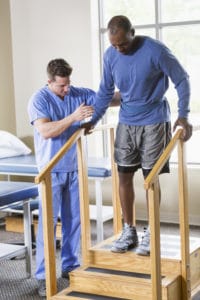
This rehabilitation process may focus on movements such as
- getting in and out of bed safely
- moving from a seated to a standing position
- walking up and down stairs
Occupational therapy may involve daily tasks such
- as getting dressed
- bathing
- eating
- moving around in your room